Designer | Caroline Loch - Graphic Design | Production - Metagraf
Location | Porto Alegre, Rio Grande do Sul, Brazil
Launch Date | January 26th, 2026
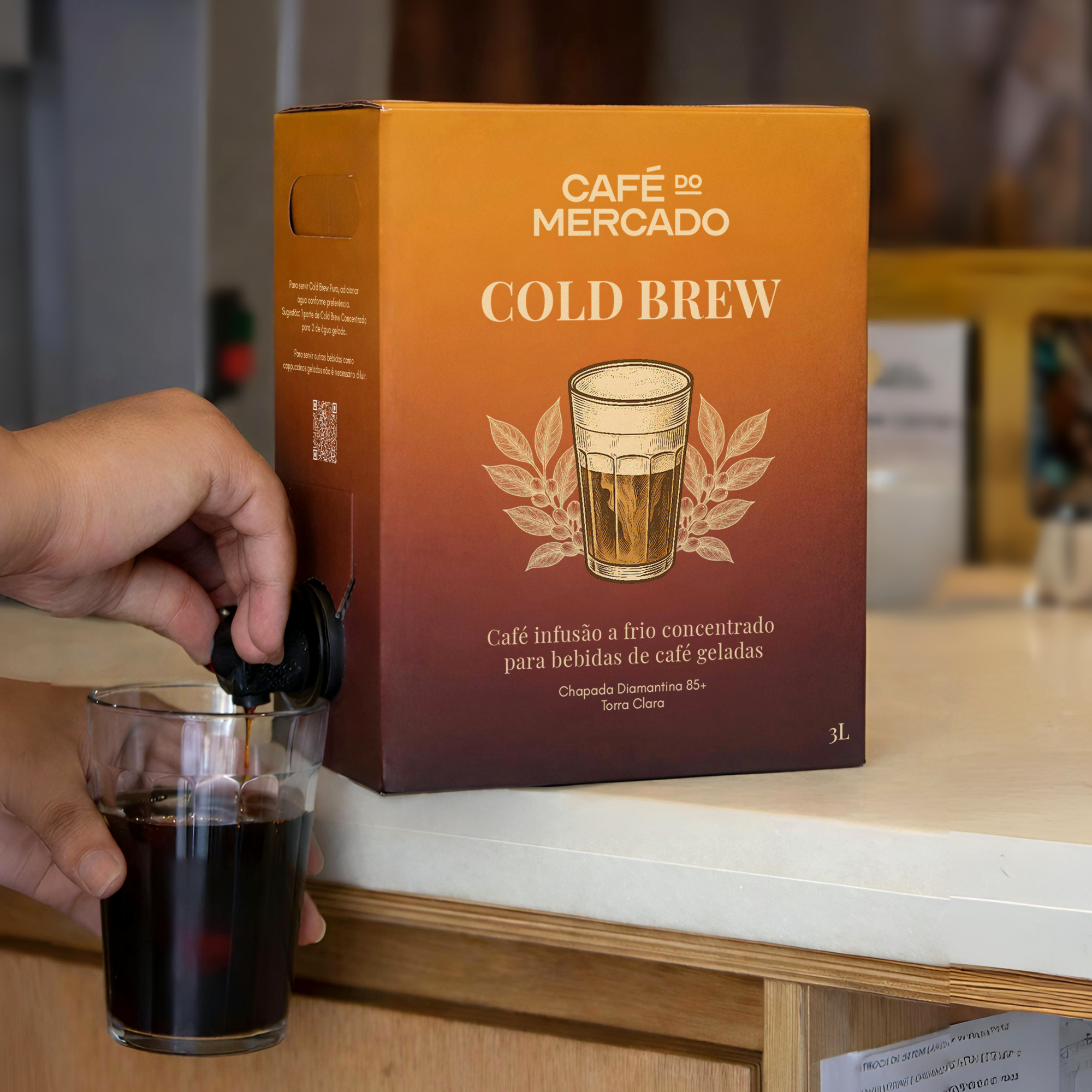
With this design, we aimed to transform cold brew from a retail beverage into an operational system tailored for professional iced drink preparation. The goal was to create a counter-ready solution that improves speed, consistency, and workflow efficiency in high-demand café and hospitality environments. Instead of designing packaging merely for shelf presence, we focused on how it performs during real service hours — where ergonomics, cleanliness, portion control, and spatial efficiency directly impact beverage quality and customer experience.
A key objective was to make cold brew preparation scalable and repeatable. The concentrated 3L format allows flexible dilution for multiple iced beverage applications, while the integrated tap ensures precision and reduces waste. By consolidating volume into a single unit, the system minimizes handling time, restocking frequency, and packaging waste.
The design was informed by professional beverage dispensing systems and bag-in-box wine formats, which prioritize functionality and controlled flow. We also drew inspiration from the visual experience of cold brew served in a glass. The vertical gradient reflects the natural density and transparency of the beverage, creating an immediate sensory connection between packaging and product.
Ultimately, this project represents “design that serves the barista” — where innovation is not decorative, but operational. The result is a packaging system that actively enhances iced beverage preparation while maintaining the authenticity and warmth of specialty coffee culture.
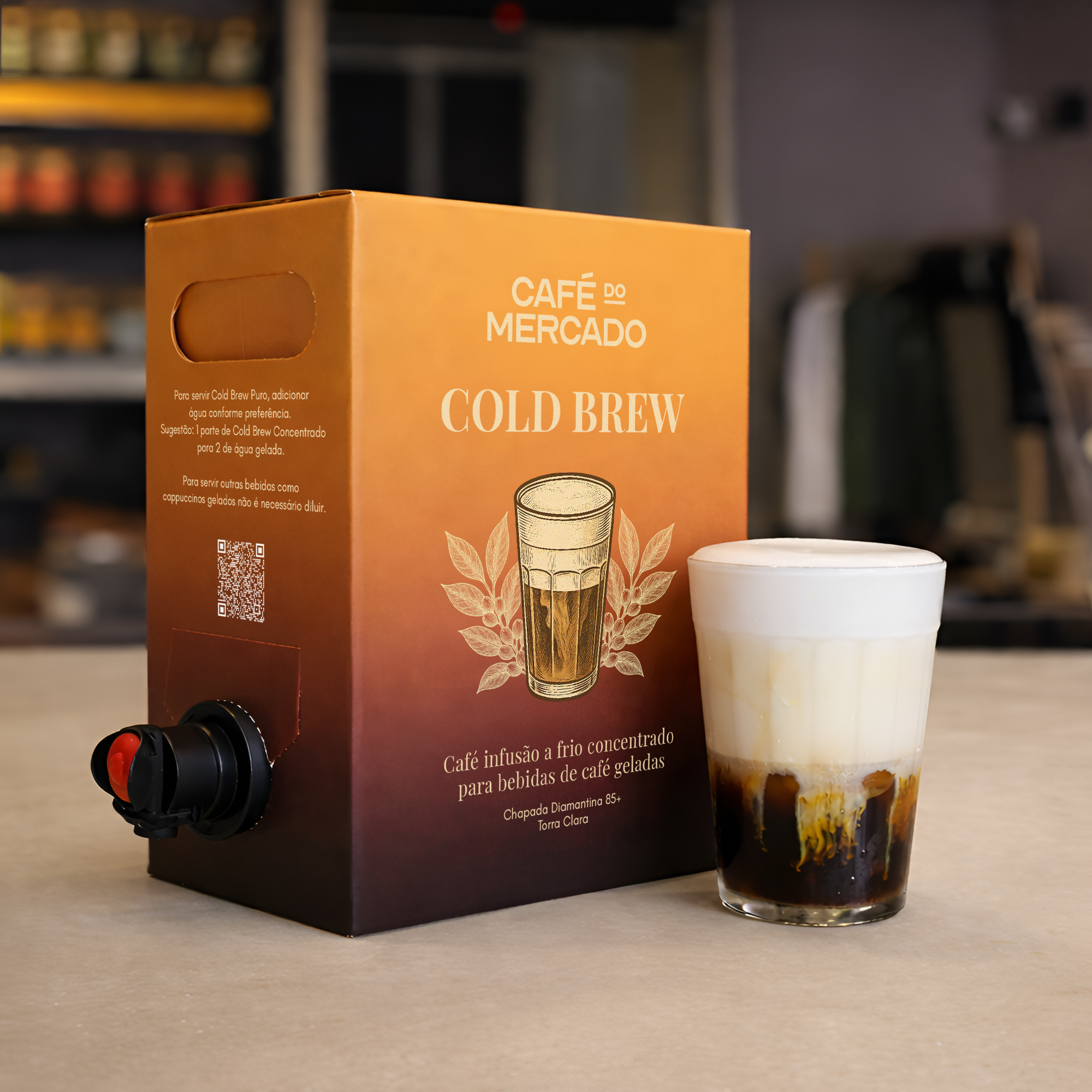
By replacing multiple single-serve bottles with a single 3-liter unit, the packaging significantly reduces material consumption, transportation volume, and packaging waste in B2B operations.
The recyclable cardboard structure, combined with a dispensing system that minimizes product loss and repeated exposure, extends freshness while reducing operational waste. Fewer units per volume also lower restocking frequency and associated logistics impacts.
Additionally, cold brew production avoids hot water extraction, contributing to reduced energy consumption throughout the supply chain — an impact that becomes increasingly meaningful at scale in professional iced beverage environments.